
Can AI Manage a Website and Mobile App 100%?
A question has been turning over in my head for the past few months. Can a website or mobile app let itself be managed almost entirely by AI? I don't mean running a chat bot in the corner. I mean the main part of the work. The content, the incoming requests, the error tracking, the reporting. So I sat down and tried it. This post is my field notes from that experiment.
First, let me be clear: this is not about a chatbot
Today every site has an AI chatbot. That problem was solved long ago. My question is more ambitious. Can AI run a site's daily work instead of a person? Let it prepare the content, read the incoming messages, catch the errors, and produce the reports. A human only steps in for critical situations. In other words, not a robotic assistant, but an operator running the business.
Let me say upfront that I am not talking about businesses with physical products or field work, like shipping, installation, or on-site service. My question is purely on the digital side. How much of the work that keeps a site or app alive can AI take over from a human.
The proof: DoktorAsistan
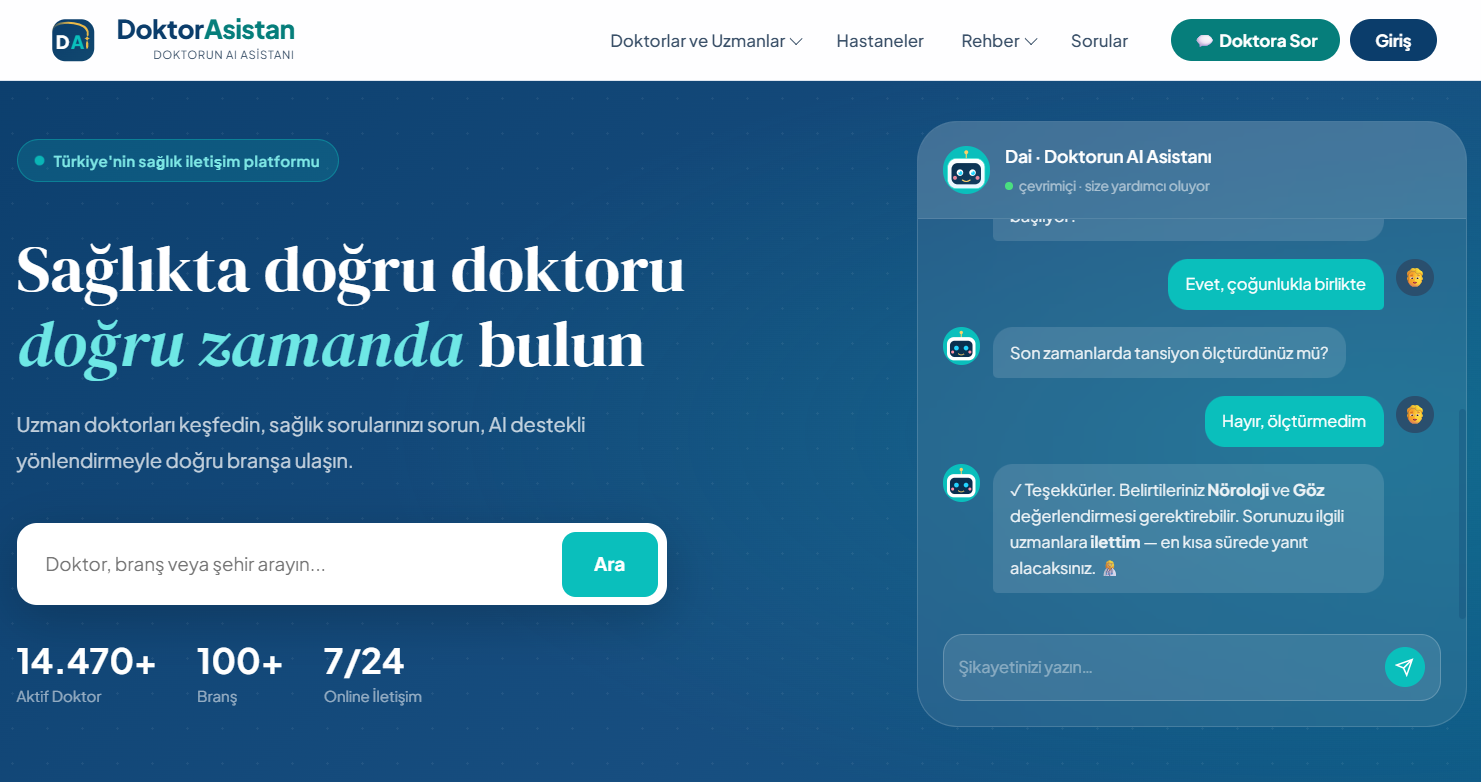
To avoid talking in the abstract, I tested this on a real product: DoktorAsistan. The fact that it is a sensitive field like healthcare made the job even harder, because the margin for error here has to be low. Here is what the AI currently does there in practice.
- It helps the patient while they write their question. It clarifies questions that are missing something or confusing.
- It forwards the question to the doctor. It reviews the doctor's reply and relays it to the patient in clear language. So it works like an editor in between.
- It manages support requests. It classifies them, prioritizes them, and gives the first response to most of them itself.
- It reads the messages coming from the contact form and responds. It flags the serious ones and brings them to the front.
- It scans the site. Errors, broken links, slow spots. It produces a regular overall health report.
- It produces and updates content. Articles, social media posts, even video outlines. It drives most of the routine content flow.
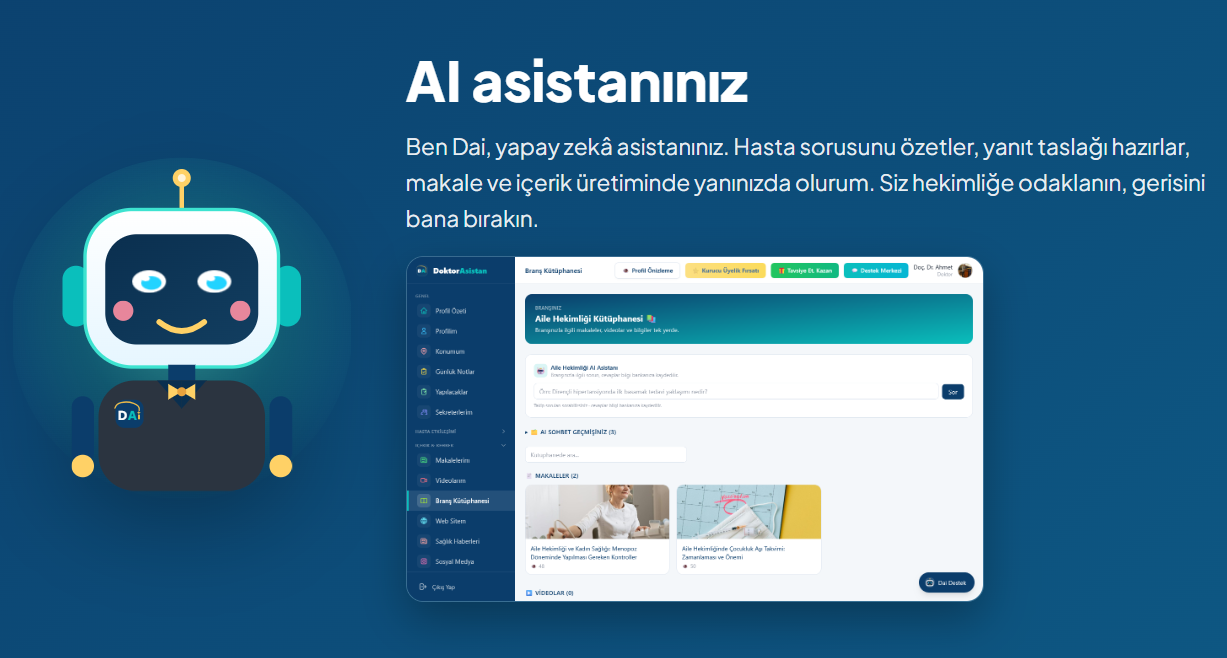
There is an important point here. Most of this flows without waiting for approval. The AI only raises a flag and hands the work to a human in risky situations or when it is not sure. So the system works quietly and only bothers you when it really needs to.
The same logic applies on mobile
This approach is not limited to websites. In a mobile app, content, notifications, support, user feedback, and error reports run just as autonomously. Web or mobile makes no difference. The only thing that changes is the interface; the logic is the same.
On the frontend there may be no difference, but behind the scenes everything changes
Looking from the outside, not much may seem to have changed on the site. The real difference is behind the scenes. The AI constantly clears the structure of errors, applies small improvements nonstop, and runs regular security scans. As a result, speed, performance, and security always stay at the top level. In other words, quality improves on its own. The user often does not see this, but feels it on every visit. It loads faster, throws fewer errors, and is more secure.
So where does the human remain?
Don't get me wrong; I am not saying we should remove humans entirely. Quite the opposite. We are moving human energy to the right place. AI takes the repetitive, boring, measurable work. The human remains for judgment, strategy, and sensitive decisions. In healthcare this matters even more. The doctor always has the final word.
Let me be honest: not everything is rosy
Hallucination, security, brand tone, legal and medical sensitivity. If you do not take these seriously, the whole thing backfires. That is why I keep every automated step reversible, grant narrow permissions, and leave critical content to human approval. When it is set up with the right boundaries, the result is genuinely surprising.
And the real question
Looking at where we have arrived with DoktorAsistan, AI runs a very large share of the daily work on its own. A human only sits at the table when a flag goes up. Looking at this, here is what I think.
Even if not 100%, can we say we have reached 99% of a website or mobile app managing itself?
What do you think: outside of emergencies, can a product manage itself almost entirely, or are we still far from that? What does your field experience say? Let's discuss it in the comments.